Blog
Pediatric Speech Therapy: Signs Your Child May Need Help Early
Every child develops at their own pace. This can make it hard to know what normal speech progress looks like. You might wonder if your little one is just a late bloomer or needs pediatric speech therapy. In the United States, communication challenges affect about 1 in 12 children. Recent research shows speech delays impact roughly 16-17% of toddlers. The good news? Getting help early can make a big difference in your child’s skills and confidence.
Table of Contents
Signs Your Child May Need Pediatric Speech Therapy

The timing of each child’s milestones varies. However, there are typical age expectations for communication abilities. Observe these symptoms in infants, young children, and preschoolers:
Delayed Babbling or First Words
Most babies start babbling by 6-9 months. They say it sounds like “ma-ma” or “ba-ba.” If your infant isn’t babbling by 9 months, that’s a red flag. No words by 18 months is another warning sign.
Limited Vocabulary or Short Sentences
By age 2, most toddlers combine words. By age 3, they speak in short sentences. If your child isn’t putting words together by 3 years old, consider speech therapy children programs. A much smaller vocabulary than other kids their age may signal a language delay.
Unclear Speech or Sound Errors
Some mispronunciations are normal. By age 4, most of a child’s speech should be clear to others. Struggling with certain sounds long after other kids master them needs attention. For example, saying “wabbit” for rabbit past age 5 might indicate a speech sound disorder.
Difficulty Understanding Instructions
Children typically follow simple commands by about 2 years old. Commands like “Give me the ball” should be easy. If your child doesn’t understand or follow basic directions, it could signal a receptive language issue. Not coming when you say “Come here” by that age may be a red flag.
Lack of Social Communication Skills
Babies should respond to their name by 12 months. Toddlers and preschoolers should make eye contact and use gestures. These include pointing or waving. If your child consistently avoids eye contact or struggles with back-and-forth interaction, they may need help.
Stuttering or Struggling with Fluency
Many toddlers repeat words or sounds. This is called normal disfluency. It usually passes quickly. If your child frequently gets stuck on sounds like “b-b-b-ball,” watch carefully. Stuttering that persists for more than 6 months or beyond age 3 needs evaluation.
Frustration or Avoidance When Speaking
Pay attention to your child’s behavior when they try to communicate. Kids who can’t express themselves may become visibly frustrated. They might throw tantrums or act out. They may shy away from talking. If your child often seems upset or withdraws when trying to speak, that’s a strong sign they need help.
How Pediatric Speech Therapy Can Help
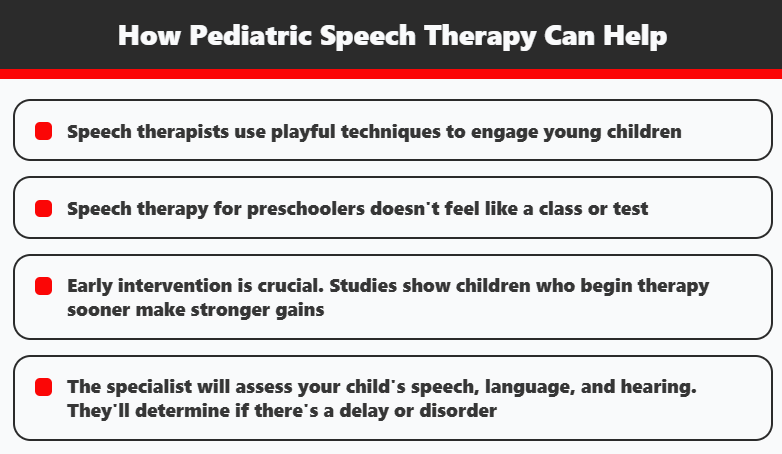
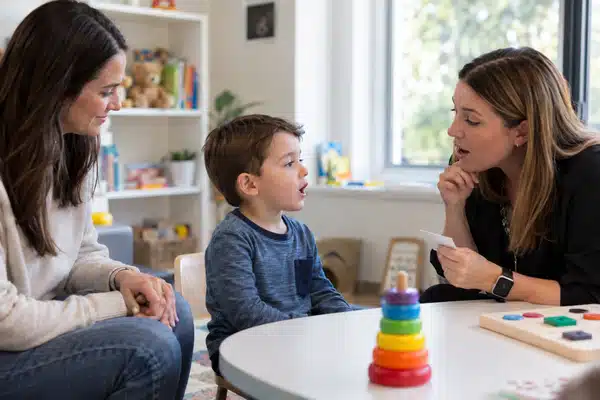
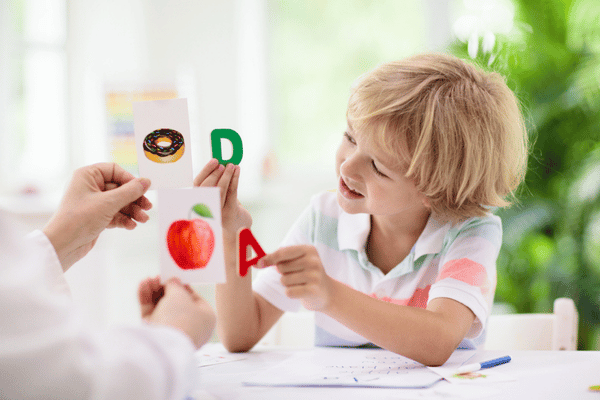
Speech therapists use playful techniques to engage young children. These specialists are also called speech-language pathologists (SLPs). They turn learning into play using games, toys, and songs. This approach motivates children and encourages talking.
Speech therapy for preschoolers doesn’t feel like a class or test. It feels fun. This helps kids stay engaged and make progress. Children’s speech therapy is highly individualized. The therapist tailors activities and goals to your child’s specific needs.
Early intervention is crucial. Studies show children who begin therapy sooner make stronger gains. These gains appear in language and social development. Research from the American Speech-Language-Hearing Association confirms this. Helping a child communicate better now boosts their confidence and learning for years to come.
If you spot any warning signs, don’t panic. Do consider reaching out for a professional opinion. Start by talking to your child’s pediatrician. They may refer you to a pediatric SLP for an evaluation. The specialist will assess your child’s speech, language, and hearing. They’ll determine if there’s a delay or disorder. Then they’ll recommend what kind of help might benefit them.
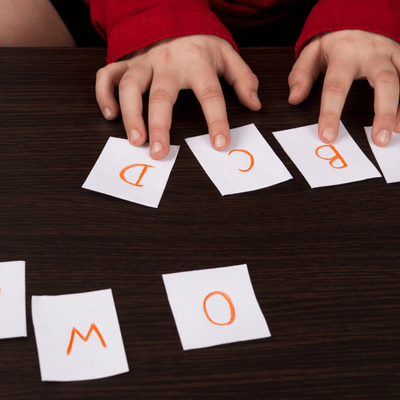
What to Expect in Speech Therapy for Children:
- Play-based learning that keeps kids engaged
- Customized goals based on your child’s needs
- Regular progress monitoring to track improvement
- Parent coaching so you can practice at home
- Fun activities using toys, books, and games
Remember, you know your child best. If something feels off about your child’s communication, trust your instincts. Seek guidance from a professional. The earlier these issues are addressed, the more effective the therapy can be.
What age should a child start pediatric speech therapy?
Children can start speech therapy as young as 6 months if delays are identified. Early intervention programs are most effective when started before age 3.
How long does speech therapy for preschoolers usually last?
The duration varies based on each child’s needs. Some children need a few months of therapy. Others may benefit from support for a year or longer.
Will my child outgrow a speech delay without help?
Some children do catch up on their own. However, waiting can mean missing the critical early development window. Professional evaluation helps you make the best decision.
How often will my child need children’s speech therapy sessions?
Most children go to therapy once or twice a week. Sessions normally last 30 to 60 minutes. Your therapist will provide a timetable depending on your child’s needs.
Can I practice speech therapy techniques at home?
Yes! Your speech therapist will teach you strategies to use during daily routines. Home practice is essential for faster progress and better outcomes.
Does insurance cover pediatric speech therapy?
When speech therapy is deemed medically necessary, many insurance companies will pay for it. Ask your provider about the specifics of your policy. Additionally, early intervention programs may provide low-cost or free services.
Give Your Child the Gift of Communication
Early pediatric speech therapy can transform your child’s life. It enhances their ability to communicate and interact with others. Better communication promotes greater connections, academic performance, and lifelong confidence.
If you are concerned about your child’s speech or language development, don’t wait. Every month counts in early childhood. The sooner you get help, the greater the results.
Are you ready to take the next step? Contact us now for a free consultation. Our skilled pediatric speech therapists are here to help your child discover their voice. To book an evaluation, please call us or visit our website.
Article written by:

Recent Posts