Blog
Top Signs Your Child Needs Speech Therapy at Home Today

As a parent, you know your child better than anyone. When something feels off about how they communicate, that gut feeling matters. Understanding the signs your child needs speech therapy can help you act early and give them the best chance at success.
Research shows that 5–12% of young children have some speech or language delay. During the pandemic, diagnoses jumped to around 16–17% of kids. The good news? Early help makes a real difference. Even a few months of targeted therapy can help children catch up quickly.
Table of Contents
Early Warning Signs of Speech Delay in Children

Every child grows at their own pace. But certain milestones signal healthy communication growth. Missing these markers could point to a problem.
Watch for these red flags in child speech and language development:
– By 12–18 months: No simple words like “mama” or “ball”
– By 18 months: Fewer than 5–10 words
– By 2 years: Under 50 words or not combining two words together
– By 3–4 years: Speech that strangers cannot understand
– At any age: Loss of words or skills they once had
If your toddler isn’t babbling by 6–9 months, this can also signal future speech delays. Limited babbling is often one of the earliest signs your toddler needs speech therapy.
How to Know If Your Child Needs Speech Therapy
Beyond milestones, behavior tells a story. Here are key signs to watch for:
They Don’t Follow Simple Directions
By age 1–2, children should respond to their name and follow basic commands like “give me the ball.” If your child stares blankly at simple requests or only responds when you physically guide them, a comprehension issue may exist.
Not responding to their name—especially with limited eye contact—is often an early sign of a communication disorder. It could also point to hearing loss, which can mimic speech delays.
Their Speech Is Hard to Understand
By age 3–4, unfamiliar people should understand most of what your child says. You shouldn’t need to translate for them constantly.
Some sound errors are normal early on. Sounds like “p,” “b,” and “m” should be clear by age 2–3. Sounds like “k,” “g,” and “s” may take until age 4. But if your 5-year-old still says “wabbit” for “rabbit,” that’s a red flag in child speech and language development.
They Stutter or Get Stuck on Words
Many toddlers repeat words when learning to talk. But frequent stuttering needs attention. Signs include repeating sounds (“b-b-b-ball”), stretching sounds (“ssssnake”), or blocks where no sound comes out.
Stuttering usually starts between ages 2–5. If it lasts longer than 6 months or gets worse after age 3–4, consult a speech therapist.
Their Voice Sounds Unusual
A persistently hoarse, raspy, or nasal voice can signal a voice disorder. If people always ask if your child has a cold when they don’t, get it checked. Chronic hoarseness may mean vocal cord strain or nodules from too much yelling.
They Avoid Talking or Show Frustration
When to worry about your child’s speech development often comes down to behavior. Children who struggle to communicate may have meltdowns when they can’t express themselves. They might withdraw from playing with other kids.
If your usually chatty child suddenly goes quiet, pay attention. This frustration or avoidance often means they know what they want to say but cannot get it out.
When to Worry About Your Child’s Speech Development
Trust your instincts. If something feels wrong, it probably deserves attention. How to know if your child needs speech therapy often starts with that parental gut feeling.
Watch for these signs your toddler needs speech therapy:
– Limited vocabulary for their age
– Unclear speech past age 3
– Trouble following directions
– Frequent frustration around communication
– Avoiding talking in social settings
Early warning signs of speech delay in children are easier to address when caught young. Studies show that therapy before age 3 leads to the best long-term results.
Supporting Your Child at Home

While waiting for an evaluation or during therapy, you can help daily. Speak clearly and slowly. Use gestures alongside words. Read books together and point to pictures. Celebrate every attempt at communication.
Mirror exercises work well for articulation practice. Let your child watch their mouth while making sounds. Tongue twisters add fun while building clarity. Games like “I Spy” encourage vocabulary growth naturally.
Most importantly, stay patient. Never scold your child for speech errors. Create a safe space where they feel comfortable trying.
Take the Next Step
If you’ve noticed red flags in child speech and language development, don’t wait. Early intervention is the gold standard for helping children overcome communication challenges.
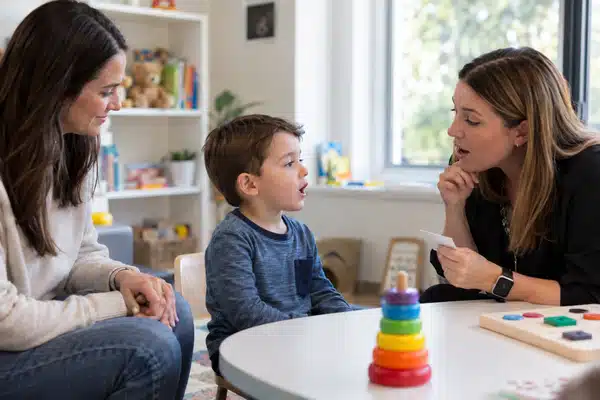
A speech-language pathologist can assess your child’s needs and create a personalized plan. Therapy sessions are play-based and engaging. Your child won’t even realize they’re working hard.
Every child deserves the tools to share their thoughts and feelings. With the right support, those clear conversations you’ve been hoping for are within reach.
Ready to help your child find their voice? Contact us today for a free consultation.
FAQs About Child Speech Therapy
At what age should I worry about my child’s speech? If your child isn’t saying any words by 18 months or not combining words by age 2, talk to your pediatrician. Early action leads to better outcomes.
How do I know if it’s just a phase? Some delays resolve on their own. But if issues persist for more than a few months, an evaluation provides peace of mind and a clear path forward.
Will my child outgrow stuttering? Some children do. However, stuttering that lasts beyond 6 months or continues past age 5 typically needs professional support.
What happens during a speech evaluation? A speech-language pathologist will use play-based tests to assess your child’s sounds, language, voice, and fluency. It’s designed to be fun and stress-free.
Can I help my child at home? Yes. Practice target sounds through games. Read together daily. Give your child time to respond without finishing their sentences. Your therapist will provide specific activities tailored to your child’s goals.
How long does speech therapy take? It varies by child and issue. Some children make big gains in a few months. Others need support for a year or more. Consistent practice speeds progress.
Article written by:

Recent Posts